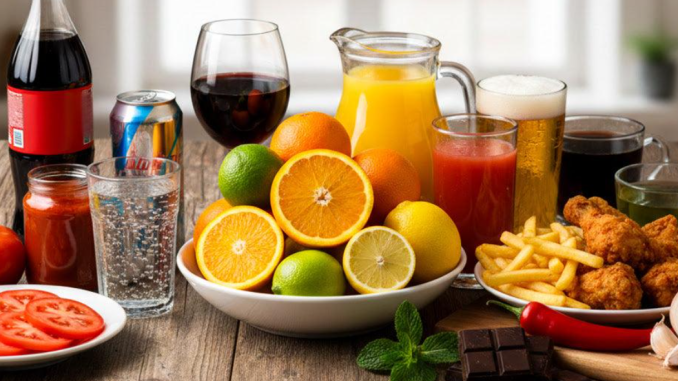
Acid reflux happens when stomach contents flow backwards into the oesophagus, sometimes causing a burning feeling in the chest or a sour taste in the mouth. Certain foods and drinks can trigger symptoms in some people, although triggers are not identical for everyone.
1. Very fatty meals: Fried foods and heavy, oily meals may worsen reflux in some people because they can delay stomach emptying.
2. Pepper-heavy dishes: Very spicy meals can irritate the digestive tract and make symptoms feel worse for some individuals.
3. Citrus fruits: Oranges, lemons and other acidic fruits may trigger discomfort in people who are sensitive to them.
4. Tomato-based foods: Tomato stew, sauces and some soups may worsen symptoms because tomatoes are acidic.
5. Chocolate: Chocolate can contribute to reflux symptoms in some people, although the effect varies.
6. Coffee and strong tea: Caffeine may trigger symptoms in certain individuals. Consider reducing intake if you notice a clear connection.
7. Fizzy drinks: Carbonated beverages may increase bloating and belching, which can aggravate reflux.
Other helpful habits: Eat smaller meals, avoid lying down for two to three hours after eating, and consider raising the head of your bed if symptoms occur at night. Gradual weight reduction may help people who are overweight.
When should you seek medical care? Frequent reflux, difficulty swallowing, repeated vomiting, unexplained weight loss or persistent symptoms deserve medical assessment. Chest pain should never automatically be assumed to be acid reflux, particularly when it comes with breathlessness, sweating or pain spreading to the arm or jaw.
Final thoughts: You do not have to eliminate every food on this list. Identify your personal triggers and discuss persistent symptoms with a healthcare professional.
Leave a Reply