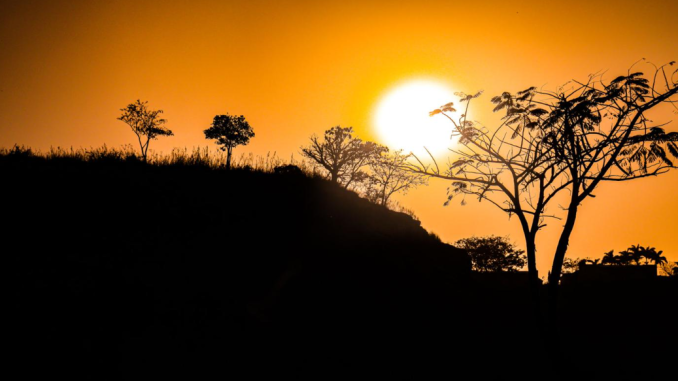
Have you ever looked at the sky in the afternoon and noticed its bright blue colour, only to see it turn orange, pink or red later in the evening? This beautiful change is not random. It happens because sunlight interacts with gases and tiny particles in the atmosphere.
1. Sunlight contains many colours, Although sunlight looks white to our eyes, it contains different colours. These include red, orange, yellow, green, blue and violet.
2. The atmosphere scatters sunlight
As sunlight enters the atmosphere, it meets tiny gas molecules. These molecules scatter some colours more strongly than others.
3. Blue light spreads across the sky
Blue light is scattered more than red light by the gases in the atmosphere. This scattered blue light reaches our eyes from different directions, making the daytime sky appear blue.
4. Sunset sunlight travels a longer distance
When the sun is close to the horizon, its light passes through a much longer stretch of atmosphere before reaching us.
5. Much of the blue light is scattered away
During sunset, more of the shorter-wavelength blue light is scattered out of the direct path of sunlight. This allows more red and orange light to dominate what we see.
6. Dust and clouds can change the colours
Particles in the atmosphere, including dust and smoke, can influence how a sunset looks. Clouds may also reflect the warm colours of sunlight.
Final thoughts
The next time you watch the sky change colour in the evening, remember that you are seeing sunlight interact with the atmosphere. It is a simple scientific process that creates one of nature’s most beautiful daily displays.
Leave a Reply