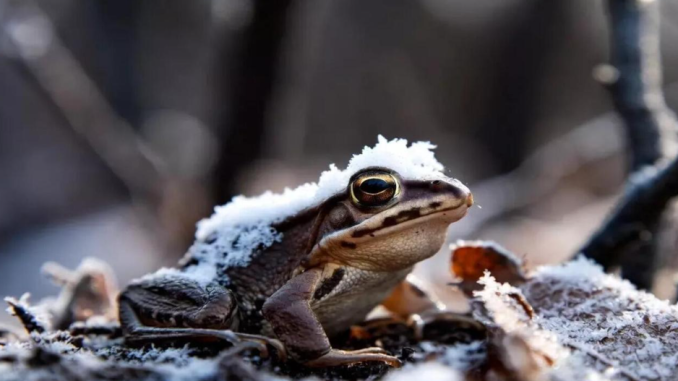
Imagine an animal becoming so cold that ice forms inside or around its body, yet it survives and becomes active again when temperatures rise. Some creatures have remarkable adaptations that allow them to endure freezing conditions. However, not every animal on this list survives in exactly the same way.
1. Wood frogs: Wood frogs can survive having much of the water in their bodies freeze during winter. Their bodies produce glucose and other substances that help protect their cells from serious damage. When the weather warms, they gradually recover.
2. Arctic woolly bear moth caterpillars: These caterpillars can survive extremely cold Arctic conditions. They produce substances that help protect their tissues from freezing damage and may spend several seasons developing.
3. Antarctic midge larvae: The larvae of this tiny insect can tolerate freezing and severe dehydration. These adaptations help them survive the harsh Antarctic environment.
4. Certain springtails: Some cold-adapted springtails survive temperatures below freezing. Special proteins and other protective chemicals help prevent damaging ice formation inside their cells.
5. Antarctic nematodes: Some microscopic roundworms can tolerate freezing and drying. They can enter a state of extremely low activity until conditions improve.
6. Certain tardigrades: Tardigrades, also called water bears, can enter a dry, inactive state called cryptobiosis. Some species tolerate extreme cold while in this condition, although they are not invincible.
7. Cold-adapted insects: Various insects survive winter by producing natural antifreeze-like substances. These chemicals help control ice formation and protect delicate tissues.
Final thoughts: These creatures show how life can adapt to extreme environments. Their survival methods are impressive, but they do not mean that ordinary animals or humans can safely endure freezing temperatures.
Leave a Reply