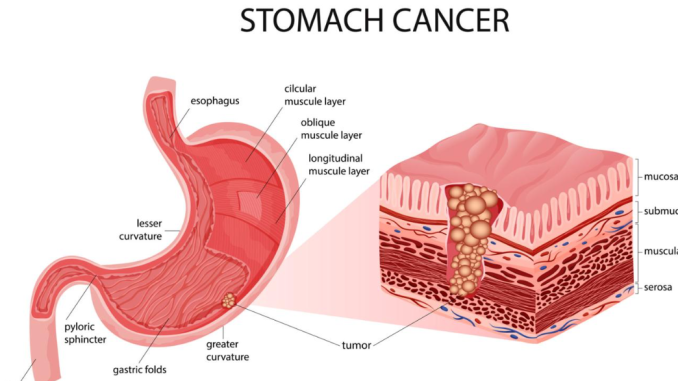
Stomach cancer, also called gastric cancer, develops when abnormal cells grow in the lining of the stomach. Its early symptoms can resemble indigestion, ulcers or other common digestive problems. This can make it difficult to recognise without medical investigation.
1. Persistent indigestion: Frequent indigestion or discomfort in the upper abdomen that does not improve should be discussed with a healthcare professional.
2. Feeling full after eating a little: Some people notice that a small meal makes them feel unusually full. This can happen for several reasons, but persistent early fullness deserves attention.
3. Unexplained weight loss: Losing weight without trying can be a warning sign of stomach cancer and other medical conditions.
4. Frequent nausea or vomiting: Repeated nausea or vomiting, particularly when accompanied by other digestive symptoms, should be assessed.
5. Difficulty swallowing: Some stomach cancers near the upper part of the stomach may be associated with difficulty swallowing.
6. Blood in vomit or black stool: Blood in vomit or black, tar-like stool can indicate bleeding in the digestive tract. Seek urgent medical attention if this happens.
7. Persistent stomach pain: Ongoing discomfort or pain in the upper abdomen should not be dismissed as ordinary gas when it keeps returning.
Final thoughts: Having indigestion does not mean you have stomach cancer. However, persistent symptoms, unexplained weight loss, difficulty swallowing or signs of bleeding require medical evaluation. A doctor may recommend an endoscopy or other tests to identify the cause. Avoid repeatedly treating severe or persistent stomach symptoms with home remedies without finding out what is responsible.
Leave a Reply