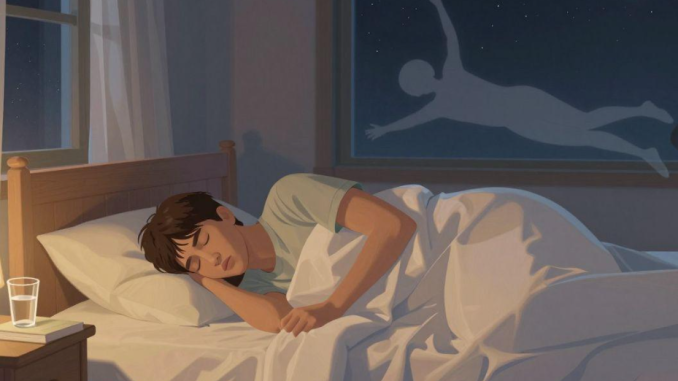
Have you ever been almost asleep when suddenly your body jerks, your leg jumps or you feel as though you are falling down a staircase? The experience can be so sudden that it makes you open your eyes immediately. Some people even wake up with their heart beating faster.
Although the sensation can be frightening, it is often caused by a common sleep-related experience known as a hypnic jerk.
1. It is called a hypnic jerk
A hypnic jerk is a sudden, involuntary muscle movement that happens as you transition from being awake to falling asleep. It may affect one part of your body or several muscles at once. Some people experience it as a quick leg kick, while others feel a sudden full-body movement.
2. Your brain is transitioning into sleep
As you fall asleep, your brain and body gradually change their activity. Muscles relax, awareness decreases and breathing patterns begin to change. During this transition, a sudden muscle movement may occur.
3. Stress may make it more noticeable
People who are under stress or experiencing anxiety may notice more sleep disturbances. When your mind remains active at bedtime, you may find it harder to settle into sleep comfortably.
4. Caffeine may contribute
Drinking coffee, energy drinks or strong tea late in the day can interfere with sleep. Stimulants may make it harder for your body to relax and can contribute to sleep disruption in some people.
5. Lack of sleep can play a role
When you regularly sleep too little, your body may become more vulnerable to sleep disturbances. Irregular sleep schedules can also make the transition into sleep less comfortable.
6. It is usually harmless
Occasional hypnic jerks are common and usually do not indicate a serious disease. However, if the movements are frequent, painful, occur repeatedly throughout the night or are accompanied by other unusual symptoms, a medical professional can help assess them.
Final thoughts
That sudden falling sensation just before sleep is often a normal sleep-related muscle jerk. Try maintaining a regular sleep schedule, reducing caffeine late in the day and creating a relaxing bedtime routine. If the episodes become frequent or interfere with your rest, speak with a healthcare professional.
Leave a Reply