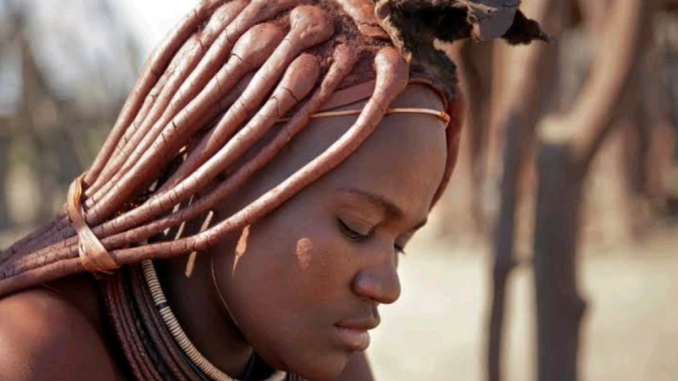
The Himba tribe, indigenous to Namibia’s Kunene region, are renowned for their distinctive customs and perseverance in preserving their way of life despite modern influences. One of their most common practices is to avoid using water for bathing; this choice is influenced by environmental, cultural, and practical considerations.
The Himba, who inhabit northern Namibia’s arid regions, suffer greatly from a lack of water. In a situation like this, water is an important resource that is primarily utilized for drinking and feeding livestock. The Himba have developed water-free alternatives for personal hygiene as a result of this scarcity.
An essential component of their hygiene routine is applying otjize, a paste made of butterfat and red ochre pigment. This paste acts as a barrier to stop insect bites, cleans the skin, and shields it from the sun.
Its reddish hue is not only esthetically pleasing but also reflects the earth’s rich tones and is in line with the Himba’s cultural identity. The methodical and ceremonial use of otjize reflects the tribe’s close ties to their traditions.
In addition to otjize, Himba women take daily smoke baths to maintain their cleanliness. They allow the smoke to fill their bodies after inhaling it from burning aromatic herbs. By cleaning and adding a pleasant scent, this method enhances personal hygiene without the need for water.
These traditions, which go beyond straightforward responses to environmental challenges, are fundamental to the Himba people’s cultural identity. The avoidance of water for bathing is intertwined with their esthetic values, social structures, and beliefs. By following these customs, the Himba maintain a strong sense of community and continuity with their ancestral heritage.
Leave a Reply