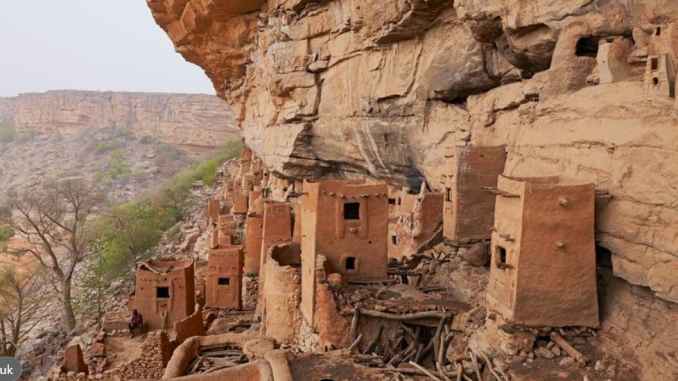
Imagine living in a village built against a massive cliff, with traditional houses and granaries fitted into the rocky landscape. This is part of the remarkable architectural heritage associated with the Dogon people of Mali.
The Dogon are especially associated with the Bandiagara Escarpment, a dramatic sandstone cliff region in central Mali.
1. The landscape offered protection
The elevated and rocky terrain provided natural defensive advantages. In earlier periods, difficult-to-reach settlements could offer protection from attacks and raiding.
2. The buildings were adapted to the environment
Traditional Dogon architecture uses locally available materials, including earth, wood and stone. Houses and granaries were designed to suit the landscape and local needs.
3. Granaries were important
Some traditional structures were built to store grain and other food supplies. Their distinctive shapes make them a memorable feature of Dogon settlements.
4. Their villages reflect community organisation
The arrangement of houses, communal spaces and religious structures reflects the social and cultural life of Dogon communities.
5. The area has international cultural importance
The Bandiagara Escarpment is recognised as a UNESCO World Heritage Site because of its cultural landscape, settlements and archaeological heritage.
The Dogon people are not simply famous for living near cliffs. They have a rich history of farming, craftsmanship, ceremonies and distinctive artistic traditions.
Their settlements show how people can adapt architecture to challenging environments while maintaining a strong connection to their cultural heritage.
Leave a Reply