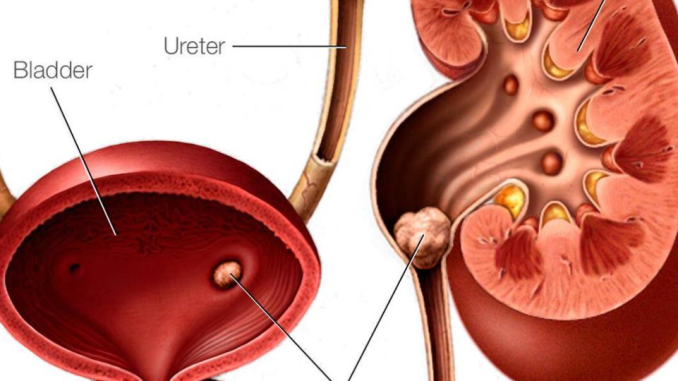
Kidney stones are hard deposits made from minerals and salts that form inside the kidneys. Some are very small and pass without causing symptoms, while larger stones may block the urinary tract and cause severe pain.
Here are seven possible signs. 1. Severe side pain: Pain may develop in the back or side, often below the ribs. It can come in waves and become intense.
2. Pain spreading towards the groin: A stone moving through the urinary tract may cause pain that travels from the side towards the lower abdomen or groin.
3. Blood in urine: Urine may look pink, red or brown, although bleeding may only be detected by a laboratory test.
4. Pain during urination: Some people experience burning or discomfort when passing urine.
5. Frequent urge to urinate: A stone near the bladder can cause repeated urges to use the toilet.
6. Nausea and vomiting: Severe pain can trigger nausea or vomiting.
7. Cloudy or unpleasant-smelling urine: These changes may occur, particularly if an infection is also present.
When should you seek help?
Severe pain, fever, chills, vomiting or difficulty passing urine requires prompt medical attention. A kidney stone combined with a urinary infection or obstruction can become dangerous.
Doctors may use urine tests, blood tests and imaging to identify a stone and check whether it is blocking urine flow.
Treatment depends on the stone’s size and location. Some stones pass naturally, while others require medication or procedures.
To reduce the risk of some stones, drink enough fluid unless your doctor has restricted it. Dietary advice depends on the type of stone, so avoid following extreme internet remedies.
Do not assume that all back pain is caused by kidney stones. Proper assessment is important.
Leave a Reply