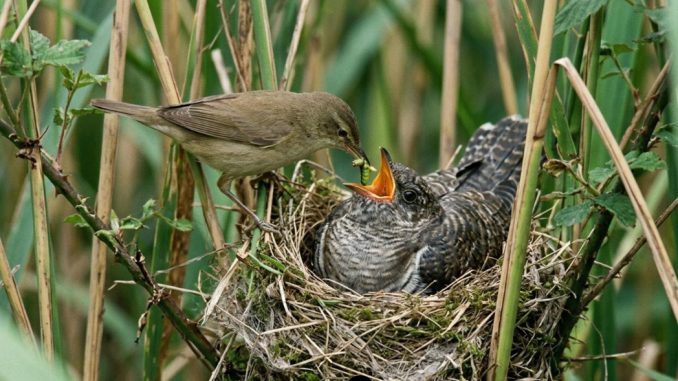
Imagine finding a baby bird in your nest that is much larger than your own chicks. This unusual situation happens in nature because some birds lay their eggs in the nests of other species and leave those birds to raise the young.
This behaviour is called brood parasitism. Here are seven things to know about it.
1. The common cuckoo uses other birds’ nests: Female common cuckoos lay eggs in the nests of other bird species. The host birds may then incubate the eggs and feed the chick.
2. The eggs may resemble the host’s eggs: Some brood-parasitic birds have evolved eggs that look similar to those of the birds whose nests they use.
3. The host bird does not always notice: If the egg is not recognised as foreign, the host may continue incubating it alongside its own eggs.
4. Some chicks remove competing eggs: In certain species, newly hatched parasitic chicks push the host’s eggs or young chicks out of the nest.
5. The parasitic chick may grow very quickly: Some young cuckoos grow larger than their foster parents while continuing to demand food.
6. Honeyguides also show brood parasitism: Certain honeyguide species lay their eggs in the nests of other birds. Their chicks may have specialised ways of competing with host offspring.
7. Host birds can develop defences: Some birds learn to recognise foreign eggs, reject them or build nests that make it harder for parasites to lay eggs.
Why does this happen? Brood parasitism allows the parent bird to avoid the energy and time required to raise its young. However, it can place a considerable burden on the host species.
Final thoughts: Nature’s parenting strategies are incredibly diverse. Brood parasitism may seem unusual to humans, but it is an established reproductive strategy that has developed in several bird species.
Leave a Reply