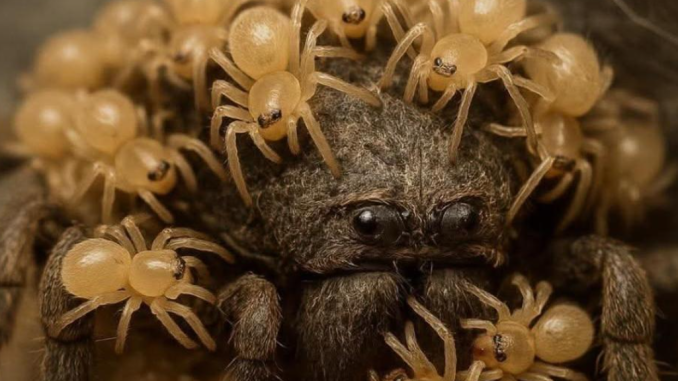
It may sound unbelievable, but cannibalism occurs in several animal species. In some cases, young animals eat their mother, while in others, siblings or adult animals eat one another. These behaviours are usually connected to survival, nutrition and reproduction rather than cruelty in the human sense.
1. Sand tiger sharks: Inside the womb, the strongest developing sand tiger shark embryos may eat their smaller siblings. This behaviour is known as intrauterine cannibalism. It happens before birth, not after the mother gives birth.
2. Some spiders: In certain spider species, young spiders may consume their mother after she provides them with food and protection. This behaviour is known as matriphagy.
3. Some scorpions: Scorpion young may remain on their mother’s back after birth. Under stressful conditions and depending on the species, cannibalism can occur among scorpions.
4. Praying mantises: Female praying mantises sometimes eat males during or after mating. This behaviour is not universal and does not happen every time they reproduce.
5. Hamsters: Mother hamsters may sometimes eat their young under conditions such as severe stress, disturbance, poor nutrition or when a baby is already dead. It is not a normal outcome of every birth.
6. Some fish: Cannibalism occurs in different fish species. Adults may eat their own eggs or young, particularly when food is scarce or environmental conditions are unfavourable.
Final thoughts: Animal behaviour can be surprising, but it often has an explanation connected to survival and reproduction. These behaviours vary greatly between species and are not always inevitable. Nature does not follow the same family rules that humans do.
Leave a Reply