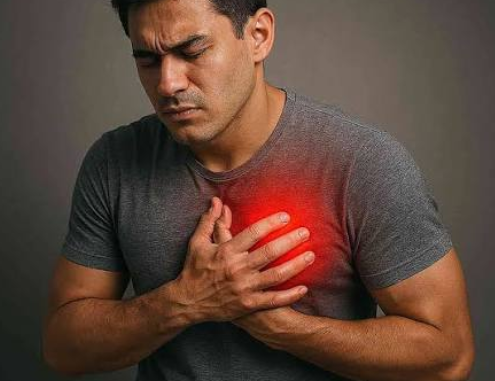
Chest pain is one symptom people should never dismiss. Sometimes it comes from indigestion or strained muscles, but it can also be a warning sign of a heart or lung problem. The location, duration and nature of the pain can provide clues, but only a proper medical assessment can determine the cause.
1. Heart attack: A heart attack may cause pressure, squeezing or discomfort in the chest. Pain can spread to the arm, back, neck or jaw. Sweating, nausea and breathlessness may also occur.
2. Angina: Angina is chest discomfort caused by reduced blood flow to the heart muscle. It may happen during physical activity or emotional stress.
3. Acid reflux: Stomach acid can travel into the oesophagus and cause a burning sensation in the chest, especially after eating or when lying down.
4. Muscle strain: Lifting heavy objects, exercise or coughing can strain chest muscles and cause pain that becomes worse with movement or pressure.
5. Lung infection: Pneumonia and other lung infections can cause chest pain, fever, cough and difficulty breathing.
6. Blood clot in the lung: A pulmonary embolism occurs when a blood clot blocks an artery in the lungs. Sudden chest pain, breathlessness, rapid heartbeat or coughing blood requires emergency care.
7. Inflammation around the heart: Pericarditis is inflammation of the sac surrounding the heart. It can cause sharp chest pain that changes with breathing or body position.
Final thoughts: Never assume new or severe chest pain is simply gas. If chest pain is sudden, persistent or accompanied by breathlessness, sweating, faintness or pain spreading to the arm or jaw, seek emergency medical help immediately. Do not drive yourself if you may be having a heart attack.
Leave a Reply