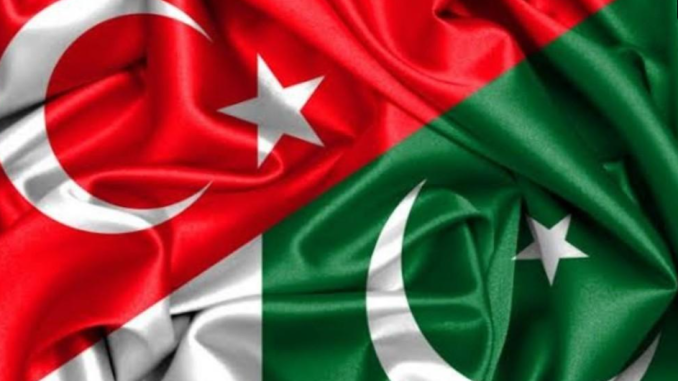
Flags are more than pieces of coloured cloth. They often represent a country’s history, religion, identity, struggles or political journey. One symbol that attracts attention is the crescent and star, which appears on the flags of several countries, including Turkey, Pakistan and Algeria. But what does it mean?
1. The crescent and star are widely associated with Islamic history: The symbols have become strongly associated with Islam in modern times, although they are not universal religious symbols and are not found on every Muslim-majority country’s flag.
2. The Turkish flag has a long historical connection: Turkey’s red flag with a white crescent and star is linked to the history of the Ottoman Empire and later became the national flag of the Turkish Republic.
3. Pakistan uses the symbols to express its national identity: Pakistan’s flag has a white crescent and star on a dark green background, with a white stripe representing religious minorities.
4. Algeria also features a crescent and star: Algeria’s flag uses green and white sections with a red crescent and star. The colours and symbols are associated with the country’s national and historical identity.
5. The symbols existed before many modern national flags: The crescent appeared in different ancient cultures and political traditions. It was not originally exclusive to Islam.
6. Not every crescent has the same meaning: The interpretation of a symbol depends on the country and its history. Some national symbols have more than one explanation.
Final thoughts: A country’s flag tells a story about its people and history. The crescent and star may look similar across different flags, but their precise meanings can vary. It is always worth learning the history behind a national flag rather than assuming that every country uses the same symbol for exactly the same reason.
Leave a Reply