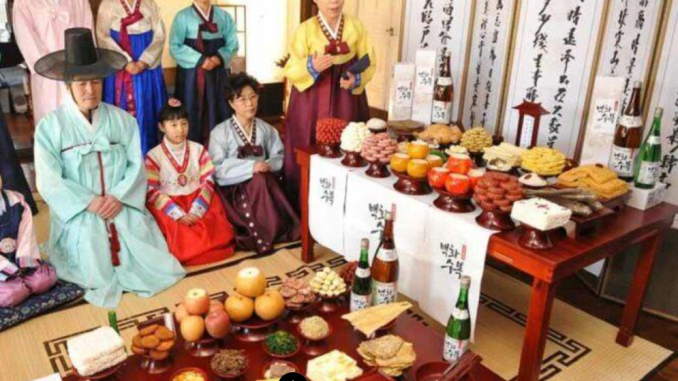
In South Korea, some families prepare carefully arranged meals during special occasions to honour relatives who have died. The practice is connected to an old tradition of remembering ancestors and showing respect for previous generations.
One well-known ceremony is called charye.
1. It is a way of remembering family members
Charye is a traditional ancestral memorial ritual. Families use it to express respect and remembrance for deceased relatives.
2. Food is carefully arranged
Traditional offerings may include rice, soup, fruit, meat, fish and other dishes. The exact foods and arrangements can differ between families and regional traditions.
3. It is often connected to major holidays
Some families perform ancestral rites during important occasions, including Lunar New Year and Chuseok, the Korean harvest festival.
4. Respect for elders is important
The practice reflects the wider cultural importance of family relationships and respect for previous generations in traditional Korean society.
5. Not every family observes the ritual today
Modern Korean families differ in their religious beliefs and customs. Some continue ancestral ceremonies, while others have simplified them or stopped practising them.
Charye is not simply about preparing food. It is about remembering where a family comes from and maintaining a connection between generations.
For many people who observe it, the ceremony is a meaningful way to honour family history and show gratitude to those who came before them.
Leave a Reply