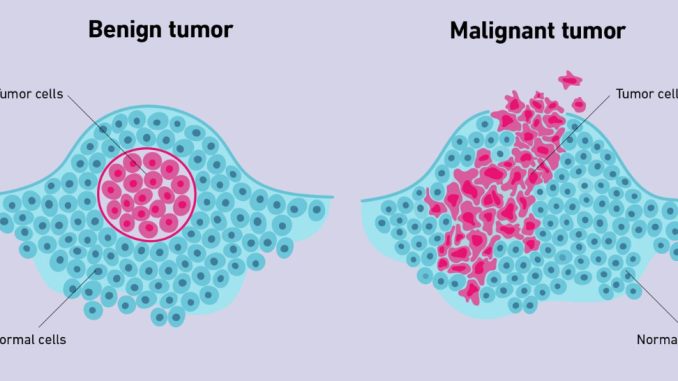
Discovering a lump or being told that a scan has found a tumour can be frightening. However, the word tumour does not automatically mean cancer. A tumour is an abnormal mass of tissue. It may be benign or malignant, and the distinction is important.
Here are seven facts. 1. Benign tumours are not cancer: A benign tumour is non-cancerous. It does not invade nearby tissues in the way malignant cancer does.
2. Malignant tumours are cancerous: Malignant cells can invade surrounding tissues and may spread to other parts of the body.
3. Benign tumours can still cause problems: Even when non-cancerous, a tumour may press against nerves, organs or blood vessels and require treatment.
4. Not every lump is a tumour: Cysts, infections, swollen lymph nodes and other conditions can also produce lumps.
5. Growth patterns differ: Many benign tumours grow slowly, while some malignant tumours grow more quickly. However, growth speed alone cannot establish whether a mass is cancerous.
6. Tests may be needed: Doctors may use imaging, blood tests or a biopsy to understand what a suspicious mass contains.
7. Treatment depends on the diagnosis: Some benign tumours only require monitoring, while others need surgery. Cancer treatment depends on the type, location and stage of the disease.
What should you do if you discover a lump?
Do not squeeze it, attempt to remove it or assume it is harmless. Arrange a medical examination, particularly if it is growing, hard, fixed, painful or accompanied by unexplained weight loss or other changes.
Only appropriate medical assessment can establish what a suspicious lump represents. Understanding the difference between benign and malignant growths can reduce unnecessary fear while encouraging people to seek timely care.
Leave a Reply