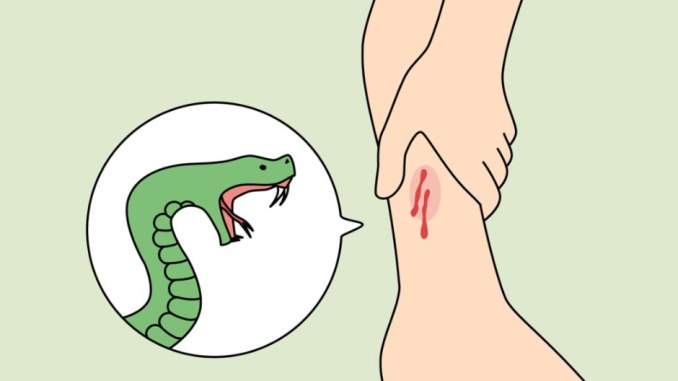
A snakebite can be frightening, especially when it happens in a farm, bush path, village compound or area with tall grass. In such a situation, panic can make it difficult to think clearly. However, the steps taken immediately after a bite can affect the person’s safety.
Not every snake is venomous, and it may be difficult to identify a snake correctly. For that reason, treat a suspected snakebite as a medical emergency rather than waiting for symptoms to appear.
Do not waste time trying to catch or kill the snake. The priority is getting the person to medical care safely.
1. Move Away From the Snake
Get to a safe distance to prevent another bite. Do not attempt to handle or capture the snake.
2. Keep the Person Calm
Reassure the person and encourage them to remain as still as possible. Movement can increase the spread of venom through the body.
3. Immobilise the Affected Limb
Keep the bitten arm or leg as still as possible. If you can do so without delaying transport, use a simple splint to limit movement. Avoid tight wrapping unless specifically instructed by trained medical professionals familiar with the local snake species.
4. Remove Tight Items
Remove rings, watches, shoes or tight clothing near the affected limb before swelling develops.
5. Arrange Urgent Hospital Transport
Get the person to the nearest appropriate hospital immediately. Call local emergency services if available, and do not let the victim walk if transport can be arranged.
6. Avoid Dangerous Traditional Remedies
Do not cut the wound, suck out venom, apply ice, use a tight tourniquet, or apply herbs and chemicals. These methods can worsen injuries or delay effective treatment.
7. Observe the Person
If possible, note the time of the bite and any symptoms. If the person becomes unconscious but is breathing normally, place them on their side if safe to do so and monitor their breathing.
Final Thoughts
Snakebite treatment may require antivenom and other hospital care. Do not wait for swelling or pain to become severe before seeking help. A photograph of the snake taken from a safe distance may help identification, but never risk another bite to obtain one. Urgent medical care is the most important step.
Leave a Reply