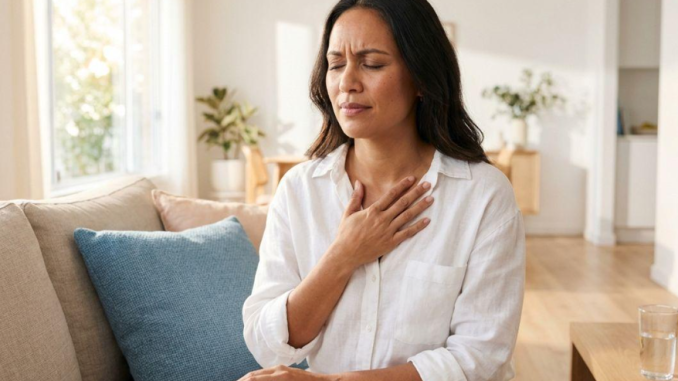
Chest discomfort after eating can be frightening. Sometimes it is related to digestion, but chest pain can also be a warning sign of a heart problem.
1. Acid reflux: Stomach acid moving into the oesophagus can cause a burning feeling behind the breastbone, especially after large meals.
2. Indigestion: Eating too quickly or consuming a heavy meal may cause upper abdominal discomfort that can feel like chest discomfort.
3. Trapped gas: Gas can cause pressure or discomfort in the upper abdomen and chest area.
4. Gallstones: Gallbladder problems can cause pain in the upper abdomen, particularly after fatty meals. The pain may spread towards the back or shoulder.
5. Oesophageal spasms: Abnormal contractions of the food pipe can cause chest pain that may resemble heart-related pain.
6. Food intolerance: Some foods may cause bloating, reflux or abdominal discomfort in sensitive individuals.
7. Heart disease: Reduced blood flow to the heart can cause chest pressure or pain. Symptoms may occur during physical activity or sometimes after a meal.
Important warning: Never assume chest pain is only indigestion. Seek emergency medical help if you experience chest pressure, pain spreading to the arm or jaw, breathlessness, sweating, nausea or faintness. Do not delay care to try home remedies.
What can help with ordinary reflux? Smaller meals, identifying trigger foods and avoiding lying down immediately after eating may reduce symptoms. Persistent discomfort should be assessed by a healthcare professional.
Final thoughts: Chest pain after meals has several possible explanations. Because some are serious, medical assessment is important whenever the cause is uncertain.
Leave a Reply