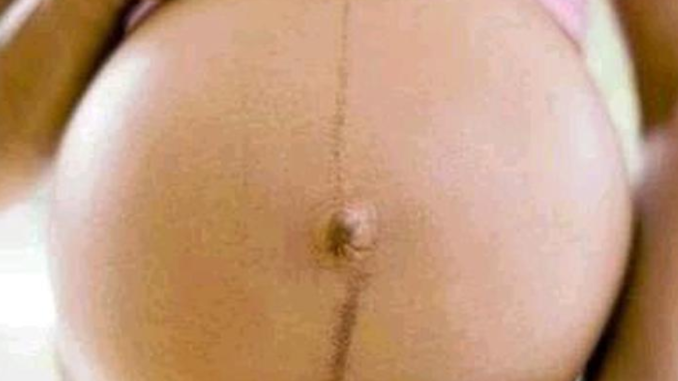
During pregnancy, many women notice a dark vertical line developing from the lower abdomen toward the belly button, and sometimes extending higher toward the chest. This line is known as the linea nigra. Although it can look unusual, it is a common and generally harmless change associated with pregnancy.
The linea nigra is actually a darkened version of a normal line called the linea alba, which runs vertically along the middle of the abdomen. Before pregnancy, it is usually very faint and difficult to notice. As pregnancy progresses, hormonal changes can make the line much more visible.
Pregnancy hormones, particularly oestrogen and melanocyte-stimulating hormones, increase activity in the skin’s pigment-producing cells. This can cause greater production of melanin, the substance responsible for skin colour. As a result, the linea alba becomes darker and appears as the familiar black or brown pregnancy line.
The line often becomes more noticeable during the second trimester, although the timing varies from one woman to another. Women with naturally darker skin may notice more pronounced pigmentation, but it can occur in anyone.
Importantly, the linea nigra does not have a special function in protecting the baby or determining the baby’s sex. Its appearance is mainly a consequence of normal hormonal and pigmentation changes. The underlying linea alba helps connect and support tissues along the centre of the abdominal wall, but the dark pigmentation itself does not provide a necessary physical function.
Some women may also experience darker nipples, facial pigmentation or darkening of other areas during pregnancy. These changes are part of the same hormonal process and usually become less noticeable after delivery.
The linea nigra normally fades gradually after childbirth as hormone levels return toward their usual state. However, it may take several months to disappear completely, and in some women, a faint line may remain.
Pregnant women should avoid trying to bleach or aggressively scrub the area. Gentle skin care and protection from excessive sunlight are safer approaches.
The important message is simple: the pregnancy line is usually a normal body change, not a disease or warning sign. However, unusual skin changes accompanied by pain, severe itching, swelling or other concerning symptoms should be discussed with a qualified healthcare professional.
Leave a Reply